Create beautiful, durable pathways and driveways that enhance your home's curb appeal and functionality.
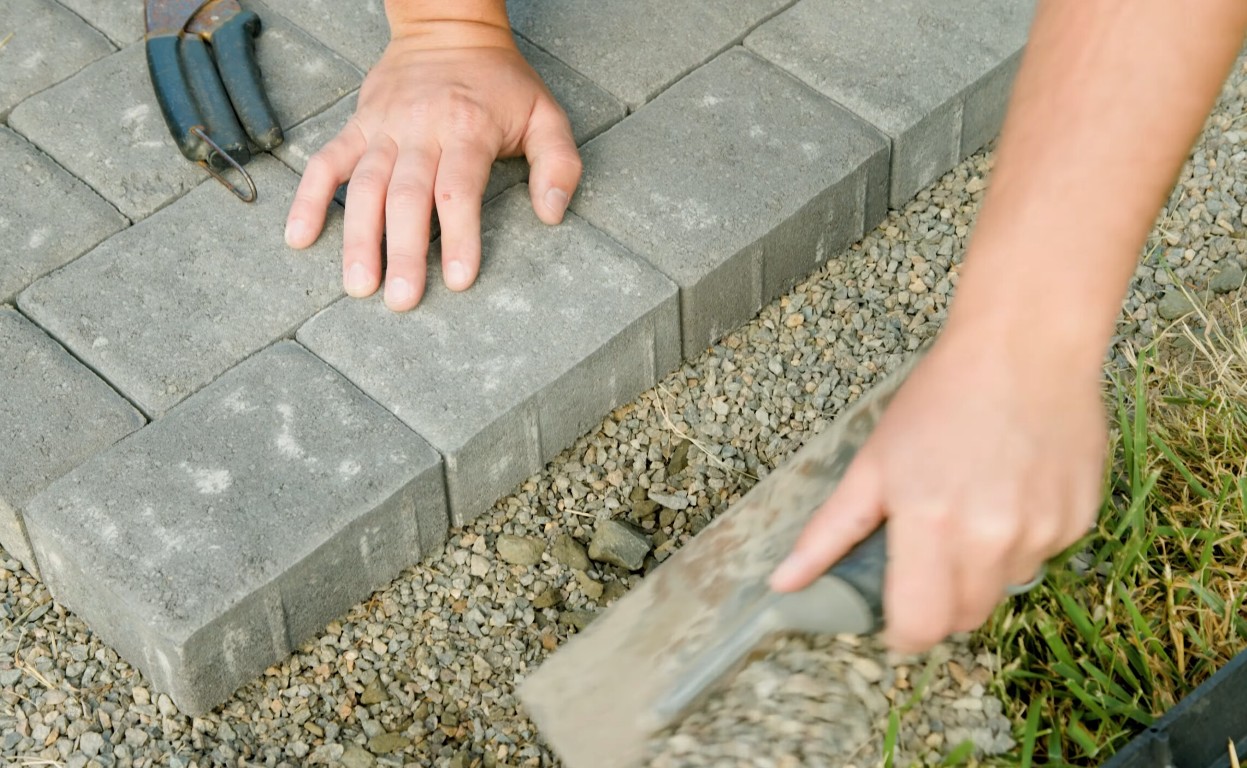
Well-installed driveway pavers and walkway systems are some of the most used and most visible parts of your property. They need to be durable enough to handle daily traffic and weather, attractive enough to boost your curb appeal, and safe enough to prevent slips and falls. Pavers check all these boxes and offer advantages that poured concrete and asphalt simply can't match.
Unlike solid concrete that cracks and requires expensive replacement, pavers are individual pieces that can flex with ground movement. If one paver gets damaged or stained, you can replace just that piece. When you need to access underground utilities, we can remove pavers, do the work, and reinstall them without the permanent scars you get with concrete.
Pavers also offer design flexibility that concrete and asphalt don't. You can create patterns, mix colors, add borders, and design curves and circles. This means your walkway or driveway becomes a design feature that enhances your entire landscape. In Birmingham, AL neighborhoods, well-designed paver installations stand out and significantly boost property values.
Let's walk you through the differences between walkway and driveway installations. While the basic process is similar, driveways require additional considerations because they handle much heavier loads.
Walkways connect different areas of your property and guide visitors to your front door. A well-designed walkway improves safety by providing a clear, level path and prevents guests from cutting across your lawn. It also adds structure to your landscaping and creates visual flow throughout your yard.
For walkways, we typically use pavers that are at least 2.5 inches thick. We install a compacted gravel base of 4 to 6 inches, depending on your soil conditions. This is adequate for foot traffic and the occasional lawn equipment. We can create gentle curves, add decorative borders, and incorporate lighting to make your walkway both functional and beautiful. Similar to our work on custom patios, we focus on creating inviting outdoor spaces.
Driveways must support vehicles weighing thousands of pounds, so they require more substantial construction. We use thicker pavers, typically 3 inches or more, and a deeper base. The base for a driveway is usually 8 to 12 inches of compacted gravel, sometimes with multiple layers of different size aggregates for optimal stability.
We pay special attention to edges and borders on driveways. Proper edge restraints prevent pavers from spreading apart under vehicle weight. We also plan for drainage carefully because driveways collect a lot of water runoff. The result is a driveway that looks stunning and handles everything from daily commutes to heavy delivery trucks. Just as we ensure structural integrity in all our Birmingham masonry projects, your paver driveway will be built to last.
Here's how it works when we install paver walkways or driveways at your home. Proper installation makes the difference between a project that lasts decades and one that starts failing in just a few years.
We start with careful planning. For driveways, we need to consider approach angles, turning radius for vehicles, and any slopes. For walkways, we think about where people naturally want to walk and how the path connects different areas. We'll help you choose paver styles and colors that complement your home and create the look you want.
We also plan for drainage from the beginning. Water is the biggest enemy of any hardscape. We design slopes that move water away from your home and toward appropriate drainage areas. We calculate exactly how much material we'll need and order everything to arrive when we're ready to install.
We excavate to the proper depth, removing existing materials and unsuitable soil. Then we install a solid base, typically starting with larger crushed stone at the bottom and finishing with fine gravel on top. We compact each layer thoroughly using professional equipment. This compaction is critical. A poorly compacted base will settle over time, causing your pavers to sink and become uneven.
We install edge restraints around the perimeter. These keep everything locked in place and prevent the pavers from creeping outward over time. Proper edge restraints are essential but often skipped by less experienced installers. We never cut corners on the parts you can't see because they determine how well your installation performs long-term.
Over the compacted base, we spread and screed a layer of bedding sand to create a perfectly smooth surface. Then we carefully place each paver according to your chosen pattern. We cut pavers precisely to fit around curves, corners, and obstacles like light posts or mailboxes.
After all pavers are set, we sweep polymeric sand into the joints. This special sand contains additives that make it harden when activated with water. The hardened joints lock pavers together, prevent weed growth, and resist ant colonization. We compact the entire surface one final time, add more joint sand if needed, and clean everything thoroughly. For projects that include other masonry work like step repairs or installations, we coordinate everything for a cohesive final result.
Paver walkways typically cost $12 to $25 per square foot installed, depending on the paver type and design complexity. A standard 4-foot-wide walkway that's 30 feet long might cost $1,500 to $3,000. Paver driveways run $15 to $30 per square foot due to the thicker base and pavers required. A typical two-car driveway might be 400 to 600 square feet and cost $6,000 to $18,000.
While pavers cost more upfront than concrete or asphalt, they last much longer and require less maintenance over their lifetime. When you factor in the added curb appeal and property value increase, pavers often prove to be the better investment. We provide detailed written estimates so you understand all costs before we start work.
Properly installed paver walkways and driveways can last 25 to 50 years or more. The pavers themselves are incredibly durable. High-quality concrete pavers have compressive strengths exceeding poured concrete and can handle freeze-thaw cycles without cracking. Natural stone pavers can last even longer, potentially a century or more.
The key to longevity is proper installation. The base preparation and compaction we talked about earlier determine how your pavers perform over time. That's why it's so important to work with experienced installers who won't cut corners. With basic maintenance like occasionally adding joint sand and keeping the surface clean, your paver installation will look great for decades while concrete driveways crack and asphalt deteriorates.
Paver maintenance is minimal. Sweep or blow off leaves and debris regularly to keep them looking clean. Once or twice a year, give them a rinse with your garden hose or use a pressure washer on a low setting. The polymeric sand in the joints prevents most weed growth, but if you see any weeds, just pull them out.
Every few years, you might need to add more joint sand if some has eroded or been washed out. You can also seal pavers to enhance their color and provide extra stain protection, though this is optional. Many homeowners never seal their pavers and they still look great for decades. If a paver ever cracks or gets badly stained, you can replace just that one piece. This repairability is a huge advantage over poured concrete, which requires expensive full-section replacement when problems develop.
Ready to upgrade your walkway or driveway?
Get Your Free Paver Estimate